Wednesday, 15 October 2014

How one bullet changed the world

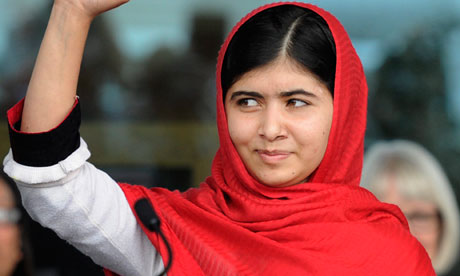
Of course, education can make the world a better place, but what happens when education makes people blind? Recent Nobel Peace Prize winner, Malala Yousafzai, said at the UN just last year that "One child, one teacher, one book & one pen can change the world", and it definitely can. There is no doubt in my mind that open education to the masses is better for everyone, globally, for future economic, cultural and social prosperity, but when 'education' becomes a ploy, it renders the campaign useless.


I am not doubting the worth of Malala's campaign, nor am I criticizing her on a personal level, rather serving to open the eyes of those who seem to have idolized Malala, and put her up on a pedestal. The point of this article is to question how Malala is more important than any other activist or campaigner, or even any other celebrity.
The bullet that hit her seems to have done her more good than harm – she has been raised to such heights that the only way is down, down, down. Malala is, of course, one of many people from developing countries who are protesting for other worthwhile causes, in which case, why does the one bullet and an international outpouring of sympathy justify the benefit that she now receives as a result of that shooting. If anything, the Taliban have only served to give her a new lease of life: Malala now lives in an opulent area of Birmingham, in a house that others could only dream of living in; she attends a private school which people without bullets in their head could barely afford one month’s tuition fee; and her entire extended family have been granted permanent refuge in the UK without any restrictions. Why would she/they ever even think about going back to their home country when the British government has given them all anyone else could only dream of?
By placing Malala on such a prominent platform undermines the work and activism of other campaigners as well as undermining the disastrous situation in other downtrodden and oppressed areas such as the SWAT valley that Yousafzai originates from. Hundreds and thousands of people have been killed by the Taliban in the tribal areas of Pakistan (inc. SWAT) as well as from drone strikes, but still, it is only Malala’s plight that is highlighted. How is it fair that one person’s situation is deemed more important than that of other people, who are likely in a more dire situation than her?
How is the Taliban shooting Malala any different than the celebrities who doused themselves with buckets of ice-cold water during the summer? After all, they too were campaigning for an important cause, more specifically ALS awareness.
Just yesterday, Malala was placed at #18 on TIME Magazine’s list of ‘Most Influential Teens’ coming behind figures such as singer-songwriter Lorde, Sasha and Malia Obama, Kendall and Kylie Jenner, amongst others. Interestingly, on this list of influential teens was a young man by the name of Erik Finman, aged 15, who too advocated for education, alongside whom was a girl named Salma Kakar, aged 17, who is part of the Afghan National Cycling Team, with similar aims as Malala in female empowerment, however both of these teens activism never reached the heights that have been attributed to Malala.
Instantaneously, when the list of ‘Most Influential Teens’ was revealed, the status of the others on the list was critiqued, for example the status and validity of the Jenner sisters as well as the Obama sisters. The Jenners and Obamas have worked hard to achieve this status, whatever route/field they work in and thus these various cases only serve to reinforce my previous point of undermining the value of others’ work.

As mentioned in a previous post, Malala’s role is not just in the realm of education activism but she is also a ploy in the political push and pull in international relations, with many criticising her because she is willingly being used to influence the foreign policies of respective nations (e.g. US, UK and Pakistan), potentially even achieving her dreams of being the Pakistani Prime Minister, with, of course, previous colonial powers, such as the UK, pushing the buttons, using her as a puppet to achieve their own interests. 

Monday, 11 November 2013

Has Homeland Lost Its Edge?

The Emmy Award winning show has been running for almost three years and is currently on its third season. While watching the first two seasons always had me anticipating for more, the current season is making me want to turn it off. The excitement that the initial seasons had is sorely lacking. Whether the first seven episodes have been leading up to something big at the end, the intrigue that had captured viewers for the first two years is something that the producers of the show need to go back, explore and reignite into this season. Whether the problem is that there isn't enough of Brody in the show at the moment, the attempted insight into his whereabouts was an epic fail of an episode - boring, disorientated and lack lustre.

Now that the show has been renewed for a fourth season, writers, producers and directors need to seriously think about what made seasons one and two such an immense success and focus on why season three isn't as successful as they'd hoped.

Although episodes six and seven have been heating up indicating potential for the season to improve, the truth is if you can't garner the interest of viewers within the two or three episodes then it is time to face facts that there is some serious work to be done.

Time to go back to the drawing board, producers!

Sunday, 20 October 2013

A Pawn in International Foreign Policy

Before you start reading, I'd just like to point out that I have nothing against the subjects of this blog post. I hope what you read opens up your views to see this case through another perspective.

Malala Yousafzai. The girl shot by the Taliban for fighting for girls' education. No doubt she is one of many courageous young teenagers in the world and I commend her campaign, but surely it is not just me who feels the hype surrounding her is going too far? Sure, all girls deserve an education, and it is a worthy cause she is fighting for, but the extent to which politicians, royals and the like are parading her around the world is unrealistic. In just a few months, if not years' time, she will be another in a long line of other young girls who have fought for similar causes.

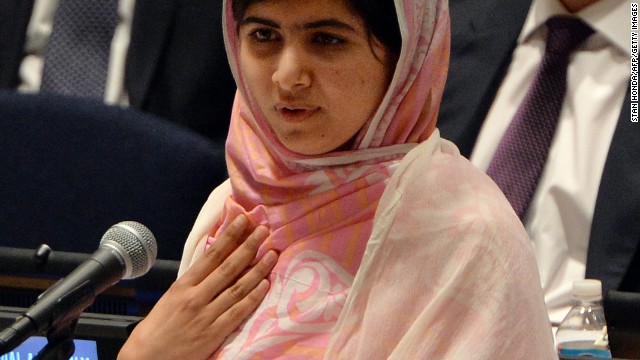
Malala speaking at the UN headquarters in New York in July 2013

The UK have picked her up and put her on a pedestal. She spoke out at a UN headquarters in New York, opened the new Library of Birmingham, received a Pride of Britain award by the one and only David Beckham (despite having lived here for less than one year and is more a Pride of Pakistan), met with President Barack Obama of the United States just last week, awarded the 2013 Sakharov Prize for freedom of thought, nominated for a Nobel Peace Prize, met with the Queen yesterday and she has just today received an Honorary Masters' Degree presented by none other than the former Prime Minister of the UK, Gordon Brown, at the University of Edinburgh. And what has she done, or had done to her in fact, for her to receive all this understandable but excessive attention you ask? She has been the subject of an undoubtedly terrible attack by the Taliban. The Taliban - everyone's enemy. This has indirectly been the cause of all the uproar surrounding her. Everyone hates the Taliban and for good reason but putting a young girl up on a pedestal only to bring her down later on just to use her as a pawn in international foreign policy is simply cruel and dismissive of her campaign.

Of course I condemn this action. No one deserves to be the target of such a vengeful crime when they are simply fighting for a rightful cause and I undoubtedly praise her efforts, but the excessive global attention she has received for the past year is simply going too far.

What people don't seem to see behind her courageous fight is that her and her family have received all they could have possibly wanted: from living in a downtrodden village in Pakistan, to living in a well-off area in Birmingham, attending a prestigious Birmingham private school, free NHS medical treatment, and her family given top jobs and access to all the resources even some of us British citizens aren't entitled to. Her and her family are flourishing and are relishing in the attention they have received over the past year.

This publicity and celebrity-status Malala has received is in contrast to that of her in her home town of the Swat District where she is hardly even known to those she has lived around for the past 15 years which further proves my point that global political dignitaries are using her as a pawn in their game of foreign policy.

Behind the scenes it is most probable that some of what she is preaching is being fed to her by other more influential people and she is a puppet on some powerful strings, which, if true, degrades her and her campaign and proves that she is simply being used and abused by higher powers with their own agenda.

I'd like to conclude with the point I have laced throughout this article, that Malala's campaign is a worthy one and her determination to fight for a cause that has already made the subject of an cowardly attack is admirable and highly commendable and therefore I do not wish to degrade her campaign by highlighting these issues but simply wish her well and that I sincerely hope she stays true to her campaign for girls' right to an education.

Friday, 6 September 2013

❤


“I don’t want normal, and easy, and simple. I want…I want painful, difficult, devastating, life-changing, extraordinary love. Don’t you want that, too?” 


-Olivia Pope, Scandal

Saturday, 5 January 2013

Is America in Decline?

During the recent Presidential Election, there was one issue on both candidates mind – a possible American decline but the fact they felt obliged to mentioned but denied it instantly, suggests that, while they do not want to give other nations the opportunity to gloat, nor are they sure whether they believe their claims that America is not in decline . While there are many that argue against America’s waning power such as Robert Kagan, in recent years and specifically since 9/11, it is hard to say that America is not declining, in fact “the United States has been fading as a global power since the 1970s, and the U.S. response to the terrorist attacks has merely accelerated this decline” (Wallerstein, 2003, p.13). America’s decline can be argued due to its limits of hard power and soft power. Joseph Nye coined the term soft power as the ability to get what you want through attraction rather than through coercion (2004a, p. x) and while America has many elements of soft power such as its culture visible through the institution of Hollywood, it also has a large hard power basis namely its economy and military. In recent years, it has become clear that these aspects of American hard and soft power are facing decline mostly due to its foreign policy and the rise in anti-Americanism and terrorism which have had a significant effect on the decline of different aspects of American hard and soft power.

Adam Quinn states in his article “The Art of Declining Politely” that declinists have been crying ‘wolf’ for a long time, but that wolf did come and it is only a matter of time till America’s decline becomes too obvious a problem that it is impossible to deny its occurrence (2011, p. 805).

America’s ‘superpower’ status is defined by its apparent strength in hard power and soft power but with China a strong competitor in the 21st century, it is difficult to ascertain whether America will hold this superpower label for much longer, after all, with a new superpower on the rise, it is inevitable that another nation will reduce the United States down to the same state as the United Kingdom. Since the United States’ rise to global hegemony was at the expense of Great Britain and its receding economy, it is only to be expected that another country will rise above America to be global superpower. The Pew Research Center’s survey (2011a) reveals that of 22 nations, 15 feel that China already has or soon will replace the United States as the world’s primary superpower – a view which is consistent throughout Western Europe – but “only in Pakistan, Jordan, the Palestinian territories and Kenya do majorities see an upside to China matching the U.S. in terms of military power”. This could partly be due to America’s military power already being in decline.

What has also affected America’s superpower status in terms of soft power is the United Kingdom’s rise above America in the country with the best soft power policies. According to Forbes, “this is the first time the US has been dethroned” with relation to matters such as “standard of government; diplomatic infrastructure; cultural output; capacity for education; and appeal to business” (2012). Although the United States and United Kingdom are close allies, it appears the British have aspects of soft power which attract other nations more than that of America. This may have been affected by the UK’s recent two years filled of festivities such as the Royal Wedding, the Queen’s Diamond Jubilee and the London Olympics but surely these factors are only have a small effect on soft power ratings in comparison to politics concerning education for example. While the UK’s hard power status is little to none, it “ranks among the ‘soft power superpowers’ of the 21st century”, (YouGov, 2012).

The term ‘hard power’ is using threats via coercion and payments in order to get what you want. This is usually through the use of the economy and the military. Of late, both of these factors of American hard power have been under attack by ‘declinists’ who say that American power is in decline. This is mainly due to the recession and Obama’s rationing of America’s use of power.  

Both the economy and the military are inextricably linked. The economy is undoubtedly what is seen as the United States most powerful source of hard power especially because America holds the key to the World Bank but due to the rising debt and poor fiscal outlook, it appears as though American economic power is decreasing more rapidly than Americans first thought. Since 9/11, the economy has had its main focus being on the war against terrorism and although “Osama bin Laden failed in his lifetime to achieve his goal of ‘bleeding America to bankruptcy’”, America’s economy suffered massively due to the “avalanche of spending of spending military on military and counter-terrorism operations [...] estimated at up to $4 trillion in foreign wars” which have contributed to ‘the deficit crisis’ that has crippled the country (ABS-CBN, 2011). “Following on from the recession of 2001 to 2003, the Iraq and Afghanistan Wars started amidst weak economic condition [...] [causing] the Iraq and Afghanistan conflicts [to be] entirely financed by debt.” Although military expenditure significantly increased, Bush administration cut taxes which in effect caused income to fall considerably. “This was the first time in American history that the Government cut taxes as it went to war”, (Institute for Economics and Peace, 2011, p. 15). As a consequence United States has now amassed a $16 trillion dollar and counting and considering this debt is only fractionally due to other governments, causing experts to emphasise how the “US government spending now depends on borrowing  money from China [...] [therefore] perhaps the moment in Britain’s decline that American policy makers should be focussing on is [...] when the US stopped the fighting by threatening to pull the plug on the British economy” (BBC, 2012) This and the still high unemployment rate have both contributed to the failing American economy and the problem may lie with Obama (a Democrat) being President but the Republicans having control over the House of Representatives and this was proved when first came into office and “offered only the heavy fist of government intervention, rising taxes, increasing poverty and welfare dependency” (Gardiner, 2012).  Because of these conflicting views between the parties, it is no wonder America’s hard power is in decline under the democrats and this is only set to continue, especially with Obama having been re-elected President.

The Iraq and Afghanistan wars were “dazzling display[s] of America’s hard military power that removed a dangerous dictator” during Bush’s presidency but since Obama’s time in office and his slow withdrawal of troops from these countries, the question is “does withdrawal from Iraw and Afghanistan really mean that American power is in decline and that of its adversaries on the rise” (Global Post, 2012)? Since the US military’s failure in Vietnam, the implications have had a significant effect on its power in modern politics and warfare with American forces having to surrender their base in Saudi in 2003 due to the threat of Al-Qaeda while in Afghanistan, the US forces failed in their attempt to overturn the Taliban rule, resulting in them leaving Afghanistan in the same in if not worse state than before with it “still run by landlords”. In more recent years since the Iraq and Afghanistan War, America’s intervention in Egypt has seen them unable to “secure the pro-revolution tilt that it wanted” and in Libya, US influence has had no effect on the fighting that still ensues (Left Futures, 2012). Therefore, it is reasonable to say that with reference to the past few decades since the Vietnam War, America’s military power has been significantly declining.

Terrorism has had a significant effect on American soft power and has led to it almost disappearing from American foreign policy. Since the 9/11 attacks, terrorism has emphasised America’s vulnerability which has shown through for the world to see thus leaving America in a state of paranoia leading them to attack all possible threats to its superpower status. This is what has led to the rise of anti-Americanism among many other nations and hence the decline in popularity of America as a result. This is mainly the result of the war on Iraq which may have eliminated the rule of Saddam Hussein but it did not solve America’s main problem – terrorism (Nye, 2004c, p.114). In fact, America’s war on Iraq saw a rapid decline in its soft power, “in the aftermath of the war, polling by the Pew Research Center (PRC) showed a dramatic decline in the popularity of the United States even in countries like Spain and Italy whose governments had supported the war. And the standing of the US plummeted in Islamic countries from Morocco through Turkey to Indonesia”, (2004, pp, 114-115). This ever changing favourability of America has been influenced by the different Presidents. According to the Pew Research Centre, “under the Bush Administration, American anti-terrorism efforts expanded [but] many [people] around the world turned against the U.S. Widespread anti-Americanism remained a key feature [...] before fading significantly following the election of Barack Obama” (2011b).

The new struggle in America is that with Islam and Muslims. In the 19th and 20th centuries, the struggle was with the integration of African Americans into a society dominated by white Americans but now, in the 21st century, a century which has been dominated by and obsessed with the aftermath of the 9/11 attacks, it appears that the hostility towards Muslims has significantly increased thus causing a rapid decline in American soft power. Since the Bush Administration, many Americans have stereotyped all Muslims as being ‘terrorists’ as well controversy regarding an American anti-Islam film causing a less than favourable view of America from Muslim-countries which has caused many Anti-America protests. This constitutes as ‘Anti-Americanism’ and has spread all around the world – people’s view of America has declined and this has more to do with their public diplomacy – hence their soft power – and although “observers [were] already noting a distinct change in the prominence and tone of U.S. public diplomacy [...] [and] some [suggested] President Obama by his very person and style [represented] a game changer for U.S. public diplomacy in the Islamic world”, (Zaharna, 2009, p. 1), this was only an introductory and Obama only has partly succeeded in his attempt to improve “America’s dismal image in the Muslim world”. America’s image in the Muslim world is still rough especially among Pakistanis and Jordanians where “America’s already poor ratings have declined further since 2008 [when] 19 percent held a positive view of the U.S. [...] compared with just 12 percent in 2012” (Pew Research Center, 2012]. This view from Pakistanis has been significantly influenced by the hard power tactics imposed on their country since Obama’s time in office during which drone attacks have significantly increased and  Therefore American culture no longer suffices to attract other nations when American hard power actions, values and institutions override its attraction and with the “world’s Muslim population is expected to increase by about 35% in the next 20 years” (PRC, 2011c), this is surely not a good outlook for America’s relations with Muslim countries and is a reminder of America’s still hostile relations with the Vietnamese following the war on Vietnam.  If America is to keep its superpower status, it needs to limit its attack on fellow nations and keep its soft power intact because it appears to be significantly declining.

To conclude, it can be said that America is in decline and this is mainly due to 9/11. Since the terrorist attacks on the World Trade Centre and The Pentagon in 2001, America’s war response to terrorism was imperative on how they were viewed in the eyes of other nations. Its war on Iraq and Afghanistan along with its receding economy has caused fellow countries to lose hope and faith in it as a superpower nation and with its values and policies as well as its poor public diplomacy with fellow countries being a part of the decisions to declare war on other nations, have also had a negative effect on its soft power hence causing an equal decline in both hard and soft power.


Sources

ABS-CBN News, 2011, Post-9/11, US economy pays steep price. [online]. Available at: <http://www.abs-cbnnews.com/business/08/17/11/post-911-us-economy-pays-steep-price> [Accessed 13 December 2012].

BBC (2012). Is the United States an empire in decline? [online]. Available at: <http://www.bbc.co.uk/news/world-us-canada-19667754> [Accessed 9 December 2012].

CBS News (2009). U.S. Terror Strategy: Hard and Soft Power [online].Available at: <http://www.cbsnews.com/2100-201_162-5221000.html> [Accessed 10 December 2012].

Ferguson, T. and Rogers, J. (1986). Right Turn: The Decline of the Democrats and the Future of American Politics. New York: Hill and Wang

Forbes (2012) The Empire Strikes Back: UK beats US in Soft Power Survey [online] Available at: <http://www.forbes.com/sites/kenrapoza/2012/11/18/the-empire-strikes-back-u-k-beats-u-s-in-soft-power-survey-says/> [Accessed 11 December 2012].

Forbes (2012). World Economists Confirm America's Decline Under Obama [online]. Available at: <http://www.forbes.com/sites/paulroderickgregory/2012/09/04/world-economists-confirm-americas-decline-under-obama/> [Accessed 12 December 2012].Gardiner, Nile. 2012. Under Barack Obama the US superpower faces four more years of decline. Telegraph.co.uk US Politics blog [blog] 8 November 2012. Available at: <http://blogs.telegraph.co.uk/news/nilegardiner/100188122/under-barack-obama-the-us-superpower-faces-four-more-years-of-decline/> [Accessed 12 December 2012].

Global Post (2012). After Iraq and Afghanistan: Is US Power in Decline [online]. Available at: <http://www.globalpost.com/dispatches/globalpost-blogs/commentary/after-iraq-and-afghanistan-us-power-decline> [Accessed 12 December 2012].

Judt, T. and Lacorne, D. (2005). With Us or Against Us: Studies in Global Anti-Americanism. New York: Palgrave Macmillan.

Left Futures, 2012, The US: a declining military and economic power. [online] Available at: <http://www.leftfutures.org/2012/08/the-us-a-declining-military-and-economic-power/> [Accessed 11 December 2012].
Magaziner, I.C. and Reich, R.B. (1982). Minding America’s business: The decline and rise of the American economy. New York: Vintage Books.

Nau, H.R. (1992). The Myth of America’s Decline. New York: Oxford University Press.

Nye Jr, J.S. (2004a). Soft Power: The Means to Success in World Politics. New York: PublicAffairs.

Nye Jr, J.S. 2004b. Hard Power, Soft Power and “The War on Terrorism”. In: Held, D and Koenig-Archibugi, M., 2004. American Power in the 21st Century. 1st ed. Cambridge: Polity Press. Ch. 4

Nye Jr, J.S., 2004. The Decline of America’s Soft Power: Why Washington Should Worry. Foreign Affairs [online] 83 (3), Available at: <http://www.jstor.org/stable/10.2307/i20033968> [Accessed 09 December 2012].

Nye Jr, J.S. 2012. Fear factor – The illusion of American decline  [online] Available at: <http://www.worldpoliticsreview.com/articles/12396/fear-factor-the-illusion-of-american-decline> [Accessed 14 December 2012].

Pew Research Center, 2011a. China seen overtaking US as global superpower. [online] Available at: <http://www.pewglobal.org/2011/07/13/china-seen-overtaking-us-as-global-superpower/> [Accessed 10 December 2012].

Pew Research Center, 2011b. From Hyperpower to Declining Power. [online] Available at: <http://www.pewglobal.org/2011/09/07/from-hyperpower-to-declining-power/> [Accessed 10 December 2012].

Quinn, A. (2011) ‘The Art of Declining Politely: Obama's prudent presidency and the waning of American power'.  International Affairs [online]  87 (4) Available at: <http://www.jstor.org/stable/10.2307/20869760> [Accessed 11 December 2012].


The Pew Forum on Religion and Public Life, 2011c. The Future of the Global Muslim Population. [online] Available at: <http://www.pewforum.org/The-Future-of-the-Global-Muslim-Population.aspx> [Accessed 13 December 2012].

Wallerstein, I. (2003) The Decline of American Power. New York: The New Press.
YouGov (2012) [online] Britain: a ‘soft power superpower’. Available at: <http://yougov.co.uk/news/2012/10/15/britain-soft-power-superpower/> [Accessed 12 September 2012].

Zaharna, R.S. 2009. Obama, U.S. Public Diplomacy and the Islamic World [online] World Politics Review. Available at: <http://www.worldpoliticsreview.com/articles/3450/obama-u-s-public-diplomacy-and-the-islamic-world> [Accessed 14 December 2012]. 

N.B. This is a paper I wrote for my class at university. Please do not copy any of this unless you are prepared to source me as the author. ©  Thank you

Thursday, 27 December 2012

Is Foreign Policy Hypocritical?

After juxtaposing recent personal events with recent public events, I have come to the conclusion that foreign policy or more specifically, public diplomacy, is hypocrisy. In comparison to the highly publicised shooting of the young Pakistani girl Malala Yousaf-zai by the Taliban, it can be said that unless you have money in the bank, have celebrity status or the whole world backing you, you will be treated like complete and utter rubbish!

The US and the UK governments were, in a way, competing to attract the young girl to their respective countries for treatment and of course, the UK won this so-called 'battle'. BUT being thrust in the limelight for taking in a girl who is suffering is to be expected but that does not mean that you forget about citizens of the UK.

Reading up about the Liverpool Care Pathway has brought me to realise that not only does the UK government not care about the citizens who have paid their way through their lives but they are also trying to get rid of them in the most derogatory, undignified way to every grace British medicine.

So, how is the LCP related to what I call the hypocrisy of British foreign policy you ask?

Well lets just say that the NHS has been portrayed to the rest of the world as THE best institution that has graced the medical world in order to attract other governments and citizens of other countries but the truth is that it is corrupt deep down. I thought hospitals were supposed to take care of you and help you get back on to your feet. But over the past 2 months I have come to realise that not only do the NHS want to hold back treatment but they do whatever they can to deprive you of food and water and all they really care about is the financial inducements they receive from the British government.

So now how much do you love the NHS? Do you agree about the Liverpool Care Pathway? And of course, do you think British foreign policy is as hypocritical I've come to believe?

Thursday, 27 September 2012

Authority and Ignorance

Why do people in positions of trust and care feel they are superior to those they caring about?
My issue I. This blog post is in regards to the 15 year old girl, Megan Stammers, who, last Thursday, ran away with her Maths teacher and her school, despite knowing something of their relationship, did not intervene when they had suspicions. On a school trip to Los Angeles, Megan's friends had seen her and the teacher, Jeremy Forrest, holding hands through the flight and reported it to teachers. These teachers however have clearly did not encroach upon this topic with Forrest or Stammers, allowing them to continue their 'relationship' despite constantly being informed of the relationship . Now in a school where there have previously been sex offenders working and teaching, surely it should have been their number one priority to investigate into concerns being raised by Megan's fellow students. However, it appears not. To me, it looks as though the school's staff clearly had too much pride and were too ignorant to believe the students' issues thus allowing the affair and grooming to continue. While the school claims they were investigating Forrest and Stammers' relationship, I feel it should have been their utmost priority to suspend the teacher on the grounds of safety for other students but also trust the students raising these concerns and treat the reports with seriously and professionally.
I have personally felt incredibly inferior to teachers when wanting to raise an important issue but chickened out for fear of being made to feel stupid by the teachers.

Friday, 31 August 2012

Captivating Stars (and Stripes)

What is it that makes us all so fascinated about America?
Is it Hollywood? Fashion? Music? Politics? History?
Or maybe it is their patriotism.

American transcendentalist Ralph Waldo Emerson claimed the States are an "asylum of all nations". Emerson aimed to lead his own path and set his own example and while he adheres to America's Declaration of Independence that "all men are created equal" his particular terminology in saying "asylum" suggests his acceptance of differences between all different people.

I for one know that their patriotism makes me slightly wish I was American.
They clearly know their stuff and are proud to be American while a lot of other countries' citizens are often embarrassed of being part of their home country.

Hollywood in itself is captivating. Its history as the home of the movie industry makes it what a lot of actors, screenwriters and directors aspire to be a part of. It can be said that Tinseltown is itself what the American Dream is all about.

Fashion is such a big industry in America. From the New York fashion week to Beverly Hills' Rodeo Drive, people from all over the world flock there even when they probably have the exact same stores in their home town.

American music is known far and wide. From the late Michael Jackson to the notorious Rihanna, the music of the States is more popular than any other country and is it any wonder? The music is so catchy and with a wide range of musicians with different taste, there sure is something to cater for everyone all over the world.

However, while Hollywood, fashion and music are HUGE in the US, I have always felt it is the politics that makes it so patriotic. From America's fight for independence to their war on terrorism, Americans have generally always remained as one in order to achieve their goals. Americans' patriotism has made me realise that while a lot of people - Americans and non-Americans alike - may not agree with the actions of a minority of Muslims who provoke stereotypes about Islam, that should not mean that I shy away from my religion. As Barack Obama once said:

"America and Islam are not exclusive and need not be in competition. Instead, they overlap, and share common principles of justice and progress, tolerance and the dignity of all human beings."

Thursday, 23 August 2012

The Right to Anonymity

What is it with tabloid newspapers and magazines that frustrates us? Is it their insane determination to publish a story that they know is not true but everyone will believe? Is it how they insist on getting the pictures that everyone has been waiting for? Or is it the amount of pain and hurt their stories will cause to the people they are about?

One of my favourite actors, Robert Pattinson recently said "tabloids make people stupid". Is he right? Do they lure the public into a false sense of amazement at the supposed actions of other people or are they telling others what they should know? Fair enough celebrities have practically signed away their right to anonymity when they decided to become famous but do they deserve to be hounded by paparazzi? Or are paparrazi only doing their job to make a living? Celebrities are still humans and they do still deserve some sort of privacy, after all, no one wants the world to know every little detail from when they go to bed to what they had for breakfast.

Let me know what you think about this in the comments.

Thanks x

Wednesday, 27 June 2012

Love Story with a Kink: Fifty Shades of Grey


Master of the Universe: The books currently 'dominating' the world. (Pun intended). 
Not long ago, Fifty Shades of Grey, by E.L. James, was relatively unknown and people had no idea of the effect it would have all around the world but within just the last six weeks it is now sold out in almost all shops with long waiting lists of people eager to read it. 

Fifty Shades of Grey is a novel set in Seattle that follows the complicated relationship of multi-billionaire Christian Grey and university graduate Anastasia Steele. It is currently a New York Times bestseller bypassing the Harry Potter series and the Twilight Saga by being the fastest selling paperback in six weeks and having sold 100,000 copies last week in the United Kingdom alone. The effect of the novel in the United States is much more widespread with it having sold over 5.4 million books in just four weeks. This success of the book is ironic especially considering it started off as Twilight fan fiction yet it has dwarfed its 'predecessor'. Constantly breaking records, it has been claimed that Fifty Shades of Grey has today reached the one million mark via Kindle e-books. 

Fifty Shades of Grey is followed up by two books: Fifty Shades Darker and Fifty Shades Freed. These make up the trilogy that depict the growth and progress of the relationship between Grey and Steele and the obstacles they face in their attempt to "bring him into the light". Just like the Twilight Saga used the vampire/werewolf façade in an attempt to make the love story between Bella and Edward more exciting, James uses this framework to introduce the element of BDSM to cover up the real issues at play in her series and these prove to be deeper than the sexual references. The trilogy follows Steele's attempts to get to know Grey and help him overcome his "fear of being touched" and eventually uncovers that he is the victim of a drug-abusing mother who neglected her child and this has led to him being emotionally detached from society until Steele conveniently "falls into his office". Up until this point, Grey has learnt to deal with his issues through control which is something he tries to inflict upon Steele but her innocence proves to be an asset to her as he grows to accept that while his mother was not capable of love, he is. As a result of this, he learns that his previous methods of coping just do not fill the void that Steele's love fills so aptly.

Also, with a film adaptation on the horizon after having been snapped up by Universal Studios, I'm sure this is a series that will continue to captivate people all around the world with its fans, dubbed 'Fifty fan girls' debating on who they would like to see play one of their favourite literary characters. 
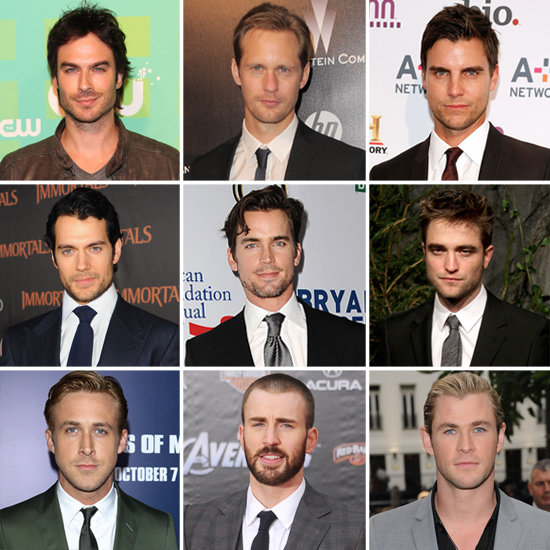
From the likes of The Vampire Diaries' Ian Somerhalder to the Twilight Saga's very own Robert Pattinson to Snow White and the Huntsman's Chris Hemsworth, being considered by fans for the role of Christian Grey, the casting director for the upcoming Fifty Shades of Grey movies has a difficult job on his hands as this is one decision the fans would want to be perfect!

Many shades of Grey: The rumoured casting choices for the role of Christian Grey.
While some may have issues with some regarding its explicit content as inappropriate, Fifty Shades of Grey continues to draw people in and aptly lives up to its blurb as it will "obsess you, possess you and stay with you forever".


Thursday, 7 June 2012

Introduction: Literary Genius

First blog! Go easy on me!
Just before I start blogging on a 'serious' note! Just thought I'd mention a few things I love and a few things I despise in terms of literature, TV and films just so you know what I'm interested in!
LOVE:
  1. LITERATURE
    1. Fifty Shades of Grey Trilogy, E. L. James - Yes its a tad out there but once I read it I was hooked. Lets face it, all of us were despite what disgusting-ness we were reading. 
    2. Twilight, Stephenie Meyer - I'm a big fan! Sad to see its coming to an end but it will always hold a big  place in my heart for years to come. 
    3. Classics such as Pride and Prejudice, The Scarlet Letter, The Great Gatsby, Romeo and Juliet, Of Mice and Men, Huckleberry Finn, The Yellow Wallpaper and Wuthering Heights. Come on, how can you be a literary genius if these books haven't had a profound effect on you? 8-)
  2. TV
    1. Pretty Little Liars - its been dubbed the new Desperate Housewives and frankly I never watched DH but PLL is sure shaping up to match up to the hype. With its gory and dark twists and turns, PLL is turning out to be a gripping show!
    2. Gossip Girl - my favourite American TV show. Full of scandal, typical high school bitchiness and scheming. Nothing beats that! 
    3. 90210 - Can't beat Naomi and her one-liners on her quest to be the best at everything!
    4. Vampire Diaries - One word: VAMPIRES!! Stefan and Damon Salvatore on their quest to save the one girl they both love from the supernatural elements that threaten her life. Even the enemy becomes an ally.
    5. The Lying Game - A relative newcomer to my list of TV shows, TLG is sure shaping up to be a great show with its unexpected twists in Emma and Sutton's search to find their birth mother.
    6. Revenge - "This is not a story about forgiveness" - the title basically says it all. Revenge portrays the loyalty of a daughter to protect the legacy of her father in the aftermath of his death.  
  3. FILM
  • I have an eclectic taste in movies so just because I've watched and loved the Twilight Saga does not mean I am an emo or a goth, it simply means I have great taste LOL. Just kidding.
  • Just because I have watched Twilight does not however mean I won't like something like say Rush Hour. Whatever tickles my fancy. I love all sorts of  movies from horror to comedy to romance to chick flick to politics.
  • I also love to know what's happening in terms of production with reference to taking one of my favourite books from page to screen. So look out for anything I mention on upcoming movies such as the Fifty Shades movies or so!